Thanks once again to Germain’s systematic uploads to etree, I managed to hear the entirety of the Grateful Dead’s midwest/east coast tour in the fall of 1976 and the two pairs of shows in California a week later. The band’s June “comeback tour” had consisted of 19 shows in the northeast and Illinois. They had played a six-show run at San Francisco’s Orpheum in July; and there had been two huge shows (24 and 30K seats respectively), again in the northeast, in August. After a seven-week break (and a cancelled show in London), the band started up again on September 23rd in Durham, NC, and played nine shows, wrapping up in Detroit, MI, on October 3rd. Two shows in Oakland and two more in Los Angeles would be the last until New Year’s Eve.
The band was recently back from its “hiatus.” Apart from the four shows the band played in and around San Francisco in 1975, they had also spent weeks in Weir’s new studio jamming and working up new material, released two GD albums and several more solo efforts, and got the Grateful Dead Movie under way. As McNally tells it, the break in touring was forced on the band by the sheer un-sustainability of the operation as it was in 1974. Not only was the Wall of Sound a financial sinkhole, but rampant drug use was becoming a real hindrance to both music and interpersonal relations and the laissez-faire business model had resulted in a bloated crew and inefficient management. As Danny Rifkin succinctly put it in a post-tour meeting in August ’74: “I’m not having fun any more.” The announcement within the organization was phrased in such a way as to encourage people to find work elsewhere, but notwithstanding Bill Graham’s “the last one” gimmick at the October 20th, 1974, show, not everyone expected the break to be permanent.
(Between October ’74 and June ’76, Phil met, married and divorced a woman named Lila; Rock Scully was arrested over a drug deal and would do some jail time (bunking with HR Halderman); Robbie Taylor – to this day Phil’s stage manager – came aboard, working at Weir’s studio; Garcia separated from Mountain Girl and moved in with Deborah Koons; Weir split from girlfriend Frankie, whom he’d been with since mid-‘69; Billy married his third wife, Shelly; Lenny Hart died of natural causes; and Mickey slowly rejoined the band even though he would not appear on Blues For Allah.)
By mid- ’76 the organization had been stripped down a bit and various changes made to booking and equipment use, but things weren’t perfect by any means. The biggest persisting problem was the band’s record company. Grateful Dead Record and the Round Records subsidiary were proving more trouble than they were worth. Despite creative and quality control, the band ran up against counterfeiters and had an insufficient distribution network that led to a partnership with United Artists. The whole self-production effort finally fell apart in July when Ron Rakow, on board since the Carousel days, author of the So What Papers and head of GD records, got wind of his impending termination and made off with $225,000 in distribution advance money from UA. On top of that, Rakow had invested in a dead-end Hell’s Angels film and borrowed money to keep the company afloat. Financially, the band was not in good shape.
They would sign and remain with Arista in September 1976, definitively abandoning GD Records (and UA).
That same month, longtime friend Rex Jackson died. He had originally come down from Hermiston, OR, through a Kesey connection, with Sonny Heard and Ram Rod in 1968 and joined up with the band as a roadie. After a stint on the Rolling Stones tour of November ‘69 he returned to the GD and worked his way up to manager (‘75-6). He fathered a daughter, Cassidy (as in Cassidy), by Eileen Law, and a son, Cole, by Betty Cantor. Ironically having incited a 1974 “drug bonfire” in Europe in response to the rampant cocaine use, Rex’s newfound free time coupled with his rock-band drug connections got the better of him and he drove off the side of the road one night on his way home.
Such were the conditions under which the Grateful Dead took to the road in late September 1976.
The band’s sound had changed significantly during the break. Perhaps most significant was the return of Mickey and new swing tempos. There was a very intentional and deliberate feel to the music in this period that I like very much: it left room for everyone to have a say and contributed, I think, to the adventurous nature of some of the tunes (more on that later).
Phil was playing a fretless bass this tour, as he would again on the spring ’77 tour. While the most evident manifestation was in the introduction to Scarlet Begonias, it also contributed a wider range in open-ended passages. He dropped that bass a little while later – I think because the fretlessness was unnecessary to his style – but was in rare form throughout the tour. Here’s a jaw-dropping little lick that will give you an idea what he was capable of (at 0:25). nor was he averse to throwing some chords around if things were getting dull.
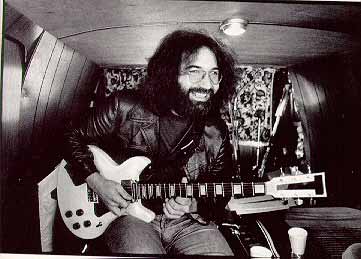
But the most distinctive element of the sound in this period might be Jerry’s Travis Bean guitar. Recognizable by a T-shaped cutout in the headstock, it was the first of his guitars with an effects loop. He would hold on to it until he got a refurbished Wolf back from Doug Irwin in fall 1977. It had an unprecedentedly bright, clean midrange that was ideally suited to the fast runs of Samson or Big River, and defines to my ears the best days of Scarlet Begonias. It could get a bit screechy in the high end though.
A word about Keith and Donna: they were far from a new addition to the band, but I haven’t really paid attention to their contributions pre-hiatus. Keith was never particularly high in the mix, but I think part of it was on purpose. He was a very colorful player but also very self-effacing. During the first few nights of the tour, he had a few real pretty absent-minded noodles between songs that showed off his abilities, but there were rather few instances where he took off in his solos, preferring instead to play safer, chord-based lines. Nonetheless, he was still alert and tight – it would be another year at least before he started to fall flat in his contributions. It's apparent, meanwhile, that Donna had a very beautiful melodic range but could not cope with the louder stuff. She sang beautifully on most ballads, particularly High Time and Looks Like Rain. Songs like Dancin’ or Playin’ In The Band demanded more power than she could comfortably put forth, and she was often both straining and low in the mix.
The fall tour was atypical in that it took longer than most tours to get rolling but didn’t taper off. I noted in my last post that the band wasn’t always tight: a certain disorganization persisted for about half the tour, with confusion in the arrangements and the odd blown change. I also noticed that there were 1-to-2-minute breaks between tunes, suggesting either technical issues or uncertainty about how to structure the sets. It is difficult to pinpoint when these breaks got shorter because many of the circulating recordings have had them removed. By the time they wrapped up in LA, however, things were moving smoothly. Over those three weeks, the band’s facility with the material improved steadily and there was none of the usual end-of-tour fatigue: perhaps the relative shortness of the tour and the several days of rest between the last two pairs helped sustain the energy.
The long pressure-free jam sessions at Weir’s had yielded a lot of new material. The Music Never Stopped, for example, grew out of repeated workouts on a Weir progression called Hollywood Cantata. Aside from Music were Help-Slip-Frank, Samson and five other new songs. They also rearranged Dancin’, St. Stephen, Minglewood and All Over Now, which had been absent since ‘71. This material would provide the backbone of late-1976 setlists, with many songs – especially Dancin’ – making near-nightly appearances.
While the relative novelty of the material meant the occasional pitfalls, it also meant that the band had an experimental approach to a large proportion of the material they were playing. Music is a good example. The thematic succession that makes up the second half of the tune had two parts: a bridge and a jam on the main theme. At one point (9/30), there was a miscue in the change that led to a sort of awkward jam before everyone came back to the same page. As the tour went on, that awkward moment was repeated intentionally, cued by Phil, and made for a third theme. By the last show, it was gone again. Another moment materialized out of haphazard noodles, becoming what was labeled Orange Tango Jam on Dick’s Picks 20. That being a favorite jam of mine I waited for it as I was listening through the tour and I noticed that the odd lick or effect reminiscent of that jam were peppered throughout, both before and after the night of the jam itself.
A different sort of improvisation stemmed from the new Drums interlude. Drums were a new addition to the sets: usually confined to a few minutes and involving little more than the regular drum kits, they were not always a nightly fixture. Nevertheless, they were regular enough to occasion experimentation with respect to the set: they floated around, generally in set II, and served variously as interludes within a song or as transitions. On September 24th, they split up Slipknot and increased the tempo significantly. As the band came back in, there was a nice little jam on the faster Slipknot theme before they worked the tempo back down into Slipknot>Franklin’s.
To a certain extent, improvisation of this sort was common currency, if not a trademark, of the band’s music throughout its career. This period was nevertheless exceptionally experimental in that department.
Finally I’d like to say a word about venues. We modern-day Heads are spoiled by the circulation of so many soundboards, but it’s a double-edged sword: while it makes for great listening, it also means we often don’t get a sense of the actual rooms the band was playing in. It struck me during one of the longer audience patches that many of these places were big concrete cubes with few acoustic qualities and little intimacy. The Wall of Sound and other financial constraints had engendered the need to book ever-bigger halls. Without including Watkins Glen, the average venue in 1973 held 13,500 seats, up from 5,900 in ‘71. Even with the European tour, 1974’s average was 10,500. In ’76 they were able to go back to smaller venues in the spring, but the fall tour still took them through gyms, event centers and arenas.
All this points to the fact that this band was still struggling. They were making completely unique music for a very dedicated fan-base and that put them on a solid foundation, but they were constantly chasing their bank balance. In 1976, after ten years on the road, there was nothing to indicate that this would ever be anything more than a hand-to-mouth exercise in survival for all those involved. They were famous in their own circle but had not gained any kind of cultural notoriety in the wider world. Nobody was writing books about them (except Hank Harrison, the Warlocks’ “manager,” who published a semi-fictional account of their early days in 1973), and none of them had a retirement fund.
Here are a few highlights from the tour: St. Stephen, 9/25 (interesting stuff in the jam); Looks Like Rain, 9/27 (Keith and Donna both sound lovely); Minglewood, (for Jerry’s solo), and Johnny B. Goode from 9/28; Around and Around, 10/03 (with the double-time ending of that period); Music 10/03 (with that middle bit), Scarlet and Lazy Lightning>Supplication 10/09; and Dancin’>Wharf Rat>Dancin’ from 10/10. As a general rule, shows got better as they went along, and I would say that the tour as a whole is most interesting for its experimental aspects. It yielded two Dick’s Picks: 20 (9/25, 28) and 33 (10/09, 10). Personally, I‘m most partial to DP 20 and the Detroit show on October 3rd.
There you have it. Happy listening!
Up Next: I'm listening four Rhythm Devils shows from the most recent tour; I'll have a word about that up shortly.
Monday, November 1, 2010


Friday, October 15, 2010
Furthur - Fall 2010
Furthur played a nine-date west coast tour in September. They had had a six-week break beforehand (barring a one-off in Golden Gate Park), and are scheduled for another before hitting the Midwest and East Coast in November. They also just announced two shows to wrap up the year in San Francisco, putting this year’s show total at a healthy 82.
September’s outing saw the premiere of three new songs, bringing their songbook to a total of 193 tunes. Two of those songs have their origins in previously written material and feature lyrics by Phil’s son Brian Lesh (with some indirect input from Robert Hunter). The full story appeared in a Jambands.com article, but the broad strokes are as follows. Having heard an outtake from David Crosby’s If Only I Could Remember My Name, Brian built on the only lyric (“Gonna let the mountain be my home”) and wrote a song for his own band. His mother Jill thereafter dug up an old set of Hunter lyrics originally intended to complete Crosby’s, upon which Brian and Phil retooled the song to incorporate all the elements. This yielded Furthur’s The Mountain Song, premiered in Oregon on the 17th and played two more times thereafter. I personally like it very much; it has a great thematic suite, like Unbroken Chain, and a lot of energy.
Brian’s second contribution to the songbook comes from Olla Belle Reed’s High On A Mountain, which has a long tradition of interpretations. Phil having reworked the tune himself, it fell to Brian to write the three new verses that complete Furthur’s version, performed in Redmond and at Red Rocks.
Finally, we were treated to one performance of Weir’s Big Bad Blues. This tune was posted, in its embryonic stages, on Weir’s facebook page a while back and sounded pretty simple and generic, with only two verses and a chorus. The performed song was much more interesting; a long, funky blues with three new verses and a nice long jam sandwiched between a very cool new bridge.
There is more funk in the band’s sound these days. There has been an undercurrent at least as far back as the Crusader Rabbit Stealth Band in 2000, but it was seldom developed into actual songs (barring Shakedown and Viola Lee) until now. I noted the Schoolgirl from last tour and now Big Bad Blues. In addition, JC funked up Stagger Lee and Come Together, and On the Road Again got a full treatment.
Another new trick appeared, this time in the transitions. They can segue seamlessly from one tune to the next (>), they can transition with a jam (>jam>), they can end one tune and start the next immediately (.>), and now they’ve come up with a new way which I’m tempted to dub “>!” because it’s inherently surprising. It involves starting the next tune on the ending chord of the previous one: the tune doesn’t resolve, and the 4th beat becomes the 1st of the new bar. They did it at least twice this tour and I hope they do more of it: it keeps everybody on their toes.
Of Furthur’s revamped material, King Solomon’s Marbles deserves some mention. I noted – uncharitably – that Kadlecik had had a little trouble with the form when they first started playing it. It was originally written and recorded during the hiatus, at a time when I think they felt the desire to experiment with some complex arrangements. Consequently, it is a rather dense progression that takes some serious attention and work to get just right. They finally nailed it from start to finish in Santa Barbara on the 20th. The second performance of the tour, on the closing night at Red Rocks, saw them start to really make an original go of it, with Chimenti in particular finding some very original things to say in his solo section. I’m glad to see a substantially new interpretation start to make some headway. The same can be said of the end of Terrapin: while the first two sections have been evolving all along, those seldom-performed sections have moved past the recital phase (for lack of a better term) and into the performance phase.
Now if JK can just get his head all the way around The Eleven…!
A few disjointed notes: Kadlecik tweaked the lyrics to Deep Elem (“Have your 20 dollars ready,” “bandits in Debellum”); the Other One has a “coming around” closing tag; Phil found a new introductory line to Colors of the Rain; the tricky vocal arrangement to Born Cross-Eyed has been settled, and China Cat and Rider seem to have been separated, performed at a week’s interval, though with the transition jam still serving as outro and into respectively.
Donor Rap: the tour opened with two show in Oregon, which Phil dedicated to Macalan (sp?) in the first real departure from his usual Donor Rap. Macalan was an Oregonian who recently donated his organs, and Phil mentioned him at both shows. It has been eleven and a half years since he’s been doing the Donor Rap and recently he’s been acknowledging that most of the audience has heard it before, and that many of them are already organ donors. There are only so many ways to say that playing at all is bittersweet moment, and that we should all emulate Cody’s courage, nobility and generosity of spirit; this was the first time that he has tried to make it immediately relevant. Parenthetically, Phil has been much more genial in his donor raps this tour than he was over the summer: a word about the rain and the cold in the first few nights, a nod to the renovations at the venue in Vegas, and he repeated how he absolutely loves playing at Red Rocks.
In closing, I’d like to say something that will likely be extremely unpopular: in some ways, Furthur is a better band than the Grateful Dead. Now let me explain before you throw me to the wolves. The Grateful Dead, for all their magic, cultural importance and personal significance to the tens of thousands of people who have grown up with them (myself included), are also plagued, in my opinion, with a certain hagiography. The deification of the band in Deadhead culture tends to obscure their humanity, and precludes a certain type of criticism. Of course we all agree that Garcia was a mess at certain periods, and that the last few years were a painful experience for all involved, but there is always the implicit agreement that there will never be anything that can touch the Grateful Dead. Any and all post-GD incarnations fall into the “used-to-be” column. But let’s look at it the other way: should we write off the ongoing work of the people who created the Grateful Dead to begin with? That would amount to a dismissal of (in this case) Weir and Phil’s contributions. There will never be another Jerry Garcia, just like there will never be another Shakespeare or another Pélé, but there will be other musicians and playwrights and soccer stars who build and expand on their work.
Over thirty years, there was a constant refinement and improvement of the way the Dead played. For all the fun of ’76 (which I’m currently listening to), they were not always tight, nor did the arrangements have the subtlety and texture that they would have later. These aspects continue to evolve. Furthur’s music is driven by forty-five years of development and experience. It is a more professional organization than the GDP ever was: it’s not clogged up with the complications of being the sole support of the extended GD family, it’s less claustrophobic, and in the sense that there is new blood in the band, the music is less inbred. I think the long period of frustration and ill-feelings in the late nineties attests to just how untenable that model had been.
This band is very tight and they work at it, they’re motivated, and they’re disciplined. They have, as a group, demonstrated a willingness to incorporate and develop individual interpretations of the Dead’s material. They’re sober, at least by comparison if not objectively. Phil and Bob have spent fifteen years finding a way to productively renew their body of work. I find the emotional range of the music to be broader, and the thematic progressions to be subtler and more intentional. Which is perfectly logical. Personal preference, naturally, is a different matter.
Jerry Garcia is dead: his body of work is finished and we’ll always have it, but his was a part of a larger musical organism that is still alive and no less interesting.
There. I said it.
Up next: I’m already halfway through the Dead’s 1976 fall tour. I should have a post up in two weeks. Cheers.
September’s outing saw the premiere of three new songs, bringing their songbook to a total of 193 tunes. Two of those songs have their origins in previously written material and feature lyrics by Phil’s son Brian Lesh (with some indirect input from Robert Hunter). The full story appeared in a Jambands.com article, but the broad strokes are as follows. Having heard an outtake from David Crosby’s If Only I Could Remember My Name, Brian built on the only lyric (“Gonna let the mountain be my home”) and wrote a song for his own band. His mother Jill thereafter dug up an old set of Hunter lyrics originally intended to complete Crosby’s, upon which Brian and Phil retooled the song to incorporate all the elements. This yielded Furthur’s The Mountain Song, premiered in Oregon on the 17th and played two more times thereafter. I personally like it very much; it has a great thematic suite, like Unbroken Chain, and a lot of energy.
Brian’s second contribution to the songbook comes from Olla Belle Reed’s High On A Mountain, which has a long tradition of interpretations. Phil having reworked the tune himself, it fell to Brian to write the three new verses that complete Furthur’s version, performed in Redmond and at Red Rocks.
Finally, we were treated to one performance of Weir’s Big Bad Blues. This tune was posted, in its embryonic stages, on Weir’s facebook page a while back and sounded pretty simple and generic, with only two verses and a chorus. The performed song was much more interesting; a long, funky blues with three new verses and a nice long jam sandwiched between a very cool new bridge.
There is more funk in the band’s sound these days. There has been an undercurrent at least as far back as the Crusader Rabbit Stealth Band in 2000, but it was seldom developed into actual songs (barring Shakedown and Viola Lee) until now. I noted the Schoolgirl from last tour and now Big Bad Blues. In addition, JC funked up Stagger Lee and Come Together, and On the Road Again got a full treatment.
Another new trick appeared, this time in the transitions. They can segue seamlessly from one tune to the next (>), they can transition with a jam (>jam>), they can end one tune and start the next immediately (.>), and now they’ve come up with a new way which I’m tempted to dub “>!” because it’s inherently surprising. It involves starting the next tune on the ending chord of the previous one: the tune doesn’t resolve, and the 4th beat becomes the 1st of the new bar. They did it at least twice this tour and I hope they do more of it: it keeps everybody on their toes.
Of Furthur’s revamped material, King Solomon’s Marbles deserves some mention. I noted – uncharitably – that Kadlecik had had a little trouble with the form when they first started playing it. It was originally written and recorded during the hiatus, at a time when I think they felt the desire to experiment with some complex arrangements. Consequently, it is a rather dense progression that takes some serious attention and work to get just right. They finally nailed it from start to finish in Santa Barbara on the 20th. The second performance of the tour, on the closing night at Red Rocks, saw them start to really make an original go of it, with Chimenti in particular finding some very original things to say in his solo section. I’m glad to see a substantially new interpretation start to make some headway. The same can be said of the end of Terrapin: while the first two sections have been evolving all along, those seldom-performed sections have moved past the recital phase (for lack of a better term) and into the performance phase.
Now if JK can just get his head all the way around The Eleven…!
A few disjointed notes: Kadlecik tweaked the lyrics to Deep Elem (“Have your 20 dollars ready,” “bandits in Debellum”); the Other One has a “coming around” closing tag; Phil found a new introductory line to Colors of the Rain; the tricky vocal arrangement to Born Cross-Eyed has been settled, and China Cat and Rider seem to have been separated, performed at a week’s interval, though with the transition jam still serving as outro and into respectively.
Donor Rap: the tour opened with two show in Oregon, which Phil dedicated to Macalan (sp?) in the first real departure from his usual Donor Rap. Macalan was an Oregonian who recently donated his organs, and Phil mentioned him at both shows. It has been eleven and a half years since he’s been doing the Donor Rap and recently he’s been acknowledging that most of the audience has heard it before, and that many of them are already organ donors. There are only so many ways to say that playing at all is bittersweet moment, and that we should all emulate Cody’s courage, nobility and generosity of spirit; this was the first time that he has tried to make it immediately relevant. Parenthetically, Phil has been much more genial in his donor raps this tour than he was over the summer: a word about the rain and the cold in the first few nights, a nod to the renovations at the venue in Vegas, and he repeated how he absolutely loves playing at Red Rocks.
In closing, I’d like to say something that will likely be extremely unpopular: in some ways, Furthur is a better band than the Grateful Dead. Now let me explain before you throw me to the wolves. The Grateful Dead, for all their magic, cultural importance and personal significance to the tens of thousands of people who have grown up with them (myself included), are also plagued, in my opinion, with a certain hagiography. The deification of the band in Deadhead culture tends to obscure their humanity, and precludes a certain type of criticism. Of course we all agree that Garcia was a mess at certain periods, and that the last few years were a painful experience for all involved, but there is always the implicit agreement that there will never be anything that can touch the Grateful Dead. Any and all post-GD incarnations fall into the “used-to-be” column. But let’s look at it the other way: should we write off the ongoing work of the people who created the Grateful Dead to begin with? That would amount to a dismissal of (in this case) Weir and Phil’s contributions. There will never be another Jerry Garcia, just like there will never be another Shakespeare or another Pélé, but there will be other musicians and playwrights and soccer stars who build and expand on their work.
Over thirty years, there was a constant refinement and improvement of the way the Dead played. For all the fun of ’76 (which I’m currently listening to), they were not always tight, nor did the arrangements have the subtlety and texture that they would have later. These aspects continue to evolve. Furthur’s music is driven by forty-five years of development and experience. It is a more professional organization than the GDP ever was: it’s not clogged up with the complications of being the sole support of the extended GD family, it’s less claustrophobic, and in the sense that there is new blood in the band, the music is less inbred. I think the long period of frustration and ill-feelings in the late nineties attests to just how untenable that model had been.
This band is very tight and they work at it, they’re motivated, and they’re disciplined. They have, as a group, demonstrated a willingness to incorporate and develop individual interpretations of the Dead’s material. They’re sober, at least by comparison if not objectively. Phil and Bob have spent fifteen years finding a way to productively renew their body of work. I find the emotional range of the music to be broader, and the thematic progressions to be subtler and more intentional. Which is perfectly logical. Personal preference, naturally, is a different matter.
Jerry Garcia is dead: his body of work is finished and we’ll always have it, but his was a part of a larger musical organism that is still alive and no less interesting.
There. I said it.
Up next: I’m already halfway through the Dead’s 1976 fall tour. I should have a post up in two weeks. Cheers.
Sunday, September 26, 2010
Grateful Dead - Europe, October 1981
The Grateful Dead went to Europe seven times in their thirty-year history and cancelled at least two other expeditions. In 1981, they went twice. The first trip, consisting of five shows in March, was a favor to Pete Townsend: the Who were breaking up and Townsend had called to ask if the band could possibly cover some dates in London. They stayed an extra few days to share a bill – and a European telecast – with the Who in Germany. In September, the Dead flew back across the pond for the first extended tour since the acclaimed 1972 visit, playing thirteen shows in seven countries between September 30th and October 19th.
The planned venues averaged 3-5,000 seats (with the notable exception of Copenhagen’s Forum Theater at about 13,000), significantly smaller that the stateside average of about 12K though not out of line with venues in Cleveland, Pittsburgh or DeMoines.
Soundboards (including at least three Millers) circulate of all but two of the shows. They all recently appeared on Workingman’s Tracker as part of the ongoing 1981 project, along with video of the shows at the Melkweg in Amsterdam (the Garcia-Weir acoustic show and the two GD performances).
After three shows in the American northeast, the band flew out and played their first European gig in Edinburg. The mood was grumpy. Technical issues caused delays and gripes from the various band-members and left space for the audience to holler at the band. Of course, the audience was Scottish, and the band can be heard talking, both among themselves and to the audience: “I can’t understand a fuckin’ word.” The show was decent.
Things changed when they hit London, however. October 4th saw a much more relaxed Weir bantering before the show, notably polling the audience as to whether they felt that Springtime for Hitler was in good taste (The Producers had been on TV the previous night). Over the four nights they played at the Rainbow Theater they built up a head of steam that would carry them through most of the rest of the tour. While most of the shows were, for my money, real good, I would point to London 10.6, Copenhagen 10.8 and Bremen 10.10 as the highlights.
I noted with a smile how Weir handled the different countries. When they went over to Germany, he made a point to e-nun-ci-ate clear-ly, and instead of his falsetto “Thank you”, it was “Danke;” Amsterdam might as well have been the US (the aud tapes reveal that a lot of the audience were in fact Americans); in Paris, he managed “intermission s’il vous plait” and a mangled “Bonne nuit et bons rêves.”
There were a total of 92 songs in the repertoire for the tour, including a Blues for Allah jam and four Spanish Jams (the latter having made a big comeback that year). The most frequent tunes were Althea and Minglewood, but aside from that, Garcia had a much broader repertoire than Weir did. Of the other most frequent tunes, most were Weir’s: Rooster, Sugar Mags, Sailor>Saint, Looks Like Rain etc. Garcia, on the other hand, had a numerous ballads like High Time or Row Jimmy that he could break out at will. This pattern holds true for the year as a whole: of the 15 most frequent songs, 13 were Weir’s. Brent only had two songs in the repertoire: Good Time Blues and Far from Me, the latter of which he only played once, in Amsterdam.
Brent, however, was a force to be reckoned with musically. He was in great form throughout the tour. He was always on point, Good Times was always a winner and there are a few moments that bear mentioning as well: his solos on FOTD on 10.4 and Scarlet 10.8, a fun little oom-pa-pa riff at the beginning of El Paso in Bremen, 10.10, and a solid lead on the only impromptu jam of the tour in Ruesselheim on the 13th.
The Drumz section now stretched out to nearly twenty minutes, with the drum solos taking up about 60 percent of that time. Almost every day, after a few minutes on the kits, Bill broke out the talking drum and Mickey his tar; they would give each other a few minutes more or less alone before closing out with the rack-toms. They were quite attached to those drums, it appears: on the Amsterdam jaunt, the only elements of the band’s gear that made it were Phil’s bass and those two drums.
Amsterdam's unscheduled Oops Concerts get a lot of attention as one of the band’s more spontaneous adventures. On a day off in Germany a week before, Garcia and Weir had gone over to Amsterdam to meet some friends of Rock Scully’s, including Basketball Diaries author Jim Carroll, William Burroughs, and a poet laureate named Vinkenoop with a tennis-champion wife and the world’s largest library of psychedelia. That night, Weir and Jerry had followed Jim Carroll’s rock/poetry set at the Melkweg with a 35-minute acoustic duet. The next day, back in Germany, the band heard that their two gigs in the south of France had been rained out, and they faced the choice of either staying in Germany doing nothing or blowing all their money in Paris before their next gig. Garcia, Weir and Scully convinced the rest of the band and the crew to go to Amsterdam instead. The crew accepted - grudgingly - on the condition that they not have to take the equipment.
So on what Scully describes as the band’s last real adventure, the Dead played two gigs on mostly borrowed equipment in a small, sweltering 1,500-capacity club tucked away on the south side of Amsterdam. The shows were a lot of fun if only because the band seemed free of the pressures of a regular tour date and could fool around somewhat with the setlist. On the first night, Brent pulled out the only Far From Me of the year, and they played the first ever Spoonful. The second night saw them open with a rare acoustic set, and the electric set boasted the first Gloria since 1968, followed by the first Lovelight since 1972, and the band’s only performance of Hully Gully.
The following day, the band was in Paris, and two days later they closed out the tour in Barcelona, the only time they ever played in Spain.
Now, the general quality of the shows notwithstanding, some Garcia issues were coming to a head. Thanks to Scully’s otherwise flawed book, we know that his heroin habit was getting to be a problem socially. Scully relates an incident that occurred upon arrival in Scotland. Upon meeting an emissary (i.e. a courier) from local contacts at the airport, a sweaty Garcia insisted upon immediately retreating to the bathroom to get high, despite objections to the effect that customs officers were twenty feet away and their hotel ten minutes from the airport.
The way in which it affected the music is less well documented. The first thing I noticed was a general laziness in moving the show along. Setlists read Jerry.>Bob, pause, Jerry.>Bob, and so on. Weir was always ready to go with the next song. The band was used to it too; one night Mickey had to fix something between tunes and you can hear him yelling to wait a second while the closing hit of Bird Song was still ringing. The only exception to this rule was Mexicali, which Jerry starts. The grainy videos from the Melkweg show that he would walk off the stage for a sec, maybe to fiddle with his rig, maybe for a puff of a cigarette.
Weir (“Mr. Clean” at that time, according to Scully) had an active stage presence. While Garcia was less than charismatic, looking generally shaggy, nobody else seemed particularly alert either, and Bob was already the one leading, calling changes, and keeping the timing and arrangements together when it was needed. There was really only one thing Garcia could be counted on to do, and that was to call the last hit of a tune. He could be capricious as well, setting off on a jam of his own accord (the first time they went along, the second time they left the stage and it segued into drums), and he was resistant to spontaneous musical suggestions put forth by the others.
Finally, I noticed that he was starting to have trouble in the faster parts of tunes. In something that would characterize his later playing as well, he would occasionally miss notes. While he was thinking and moving in time, there would be occasions, especially in faster riffs like Cumberland or Samson, when it sounded like he was missing the string. I should stress that for the vast majority of the shows, his playing was still sharp and that the shows don’t betray a serious issue. But there was a shadow of things to come in the next few years.
Overall, his condition and attitude were getting to be too much for his band-mates. On the last night of the tour, in Barcelona, they presented Jerry with a letter, penned by Phil but signed by everyone, expressing their dissatisfaction with his behavior and musicianship. It started: “Dear Sir and Brother. You have been accused of certain high crimes and misdemeanors against the art of music. To wit: playing in your own band; never playing with any dynamics; never listening to what anyone else plays…” Considering the legendary avoidance of confrontation that characterized the organization’s inter-personal relations, I take this to be a significant step, expressing a lot more than passing frustration.
While I confess I have not listened systematically to a significant portion of 1980-82, I think this European tour is a positive representation of the musical state of the band in that period. The extended jamming on, say, Scarlet>Fire, still yielded interesting moments, especially thanks to Brent, and the more complex Weir tunes like Sailor>Saint were tight and well executed. There were fun moments, like the time Garcia segued into Around and Around so fast that Weir had to jump to the mic, after which Weir screwed around with the introduction to Good Lovin’ to keep him on his toes. Not Fade Away tended to have a nice long jam-in, Truckin’ had those new whistle blasts at the intro riff, Weir was dropping F-bombs in Looks Like Rain and Saint, and the Altheas of this period are some of my favorite. Finally, though musical issues are lurking in the wings, it’s still easy enough to ignore them, and most of the tour is definitely worth a listen.
Up next: Furthur’s on tour, so I’m listening to that. I’m a little disappointed that only three of the shows have appeared (those West Coast tapers tend to be slower than the Joe Beacons of the world), so I guess I’ll be dropping some money on Nugs.net…
The planned venues averaged 3-5,000 seats (with the notable exception of Copenhagen’s Forum Theater at about 13,000), significantly smaller that the stateside average of about 12K though not out of line with venues in Cleveland, Pittsburgh or DeMoines.
Soundboards (including at least three Millers) circulate of all but two of the shows. They all recently appeared on Workingman’s Tracker as part of the ongoing 1981 project, along with video of the shows at the Melkweg in Amsterdam (the Garcia-Weir acoustic show and the two GD performances).
After three shows in the American northeast, the band flew out and played their first European gig in Edinburg. The mood was grumpy. Technical issues caused delays and gripes from the various band-members and left space for the audience to holler at the band. Of course, the audience was Scottish, and the band can be heard talking, both among themselves and to the audience: “I can’t understand a fuckin’ word.” The show was decent.
Things changed when they hit London, however. October 4th saw a much more relaxed Weir bantering before the show, notably polling the audience as to whether they felt that Springtime for Hitler was in good taste (The Producers had been on TV the previous night). Over the four nights they played at the Rainbow Theater they built up a head of steam that would carry them through most of the rest of the tour. While most of the shows were, for my money, real good, I would point to London 10.6, Copenhagen 10.8 and Bremen 10.10 as the highlights.
I noted with a smile how Weir handled the different countries. When they went over to Germany, he made a point to e-nun-ci-ate clear-ly, and instead of his falsetto “Thank you”, it was “Danke;” Amsterdam might as well have been the US (the aud tapes reveal that a lot of the audience were in fact Americans); in Paris, he managed “intermission s’il vous plait” and a mangled “Bonne nuit et bons rêves.”
There were a total of 92 songs in the repertoire for the tour, including a Blues for Allah jam and four Spanish Jams (the latter having made a big comeback that year). The most frequent tunes were Althea and Minglewood, but aside from that, Garcia had a much broader repertoire than Weir did. Of the other most frequent tunes, most were Weir’s: Rooster, Sugar Mags, Sailor>Saint, Looks Like Rain etc. Garcia, on the other hand, had a numerous ballads like High Time or Row Jimmy that he could break out at will. This pattern holds true for the year as a whole: of the 15 most frequent songs, 13 were Weir’s. Brent only had two songs in the repertoire: Good Time Blues and Far from Me, the latter of which he only played once, in Amsterdam.
Brent, however, was a force to be reckoned with musically. He was in great form throughout the tour. He was always on point, Good Times was always a winner and there are a few moments that bear mentioning as well: his solos on FOTD on 10.4 and Scarlet 10.8, a fun little oom-pa-pa riff at the beginning of El Paso in Bremen, 10.10, and a solid lead on the only impromptu jam of the tour in Ruesselheim on the 13th.
The Drumz section now stretched out to nearly twenty minutes, with the drum solos taking up about 60 percent of that time. Almost every day, after a few minutes on the kits, Bill broke out the talking drum and Mickey his tar; they would give each other a few minutes more or less alone before closing out with the rack-toms. They were quite attached to those drums, it appears: on the Amsterdam jaunt, the only elements of the band’s gear that made it were Phil’s bass and those two drums.
Amsterdam's unscheduled Oops Concerts get a lot of attention as one of the band’s more spontaneous adventures. On a day off in Germany a week before, Garcia and Weir had gone over to Amsterdam to meet some friends of Rock Scully’s, including Basketball Diaries author Jim Carroll, William Burroughs, and a poet laureate named Vinkenoop with a tennis-champion wife and the world’s largest library of psychedelia. That night, Weir and Jerry had followed Jim Carroll’s rock/poetry set at the Melkweg with a 35-minute acoustic duet. The next day, back in Germany, the band heard that their two gigs in the south of France had been rained out, and they faced the choice of either staying in Germany doing nothing or blowing all their money in Paris before their next gig. Garcia, Weir and Scully convinced the rest of the band and the crew to go to Amsterdam instead. The crew accepted - grudgingly - on the condition that they not have to take the equipment.
So on what Scully describes as the band’s last real adventure, the Dead played two gigs on mostly borrowed equipment in a small, sweltering 1,500-capacity club tucked away on the south side of Amsterdam. The shows were a lot of fun if only because the band seemed free of the pressures of a regular tour date and could fool around somewhat with the setlist. On the first night, Brent pulled out the only Far From Me of the year, and they played the first ever Spoonful. The second night saw them open with a rare acoustic set, and the electric set boasted the first Gloria since 1968, followed by the first Lovelight since 1972, and the band’s only performance of Hully Gully.
The following day, the band was in Paris, and two days later they closed out the tour in Barcelona, the only time they ever played in Spain.
Now, the general quality of the shows notwithstanding, some Garcia issues were coming to a head. Thanks to Scully’s otherwise flawed book, we know that his heroin habit was getting to be a problem socially. Scully relates an incident that occurred upon arrival in Scotland. Upon meeting an emissary (i.e. a courier) from local contacts at the airport, a sweaty Garcia insisted upon immediately retreating to the bathroom to get high, despite objections to the effect that customs officers were twenty feet away and their hotel ten minutes from the airport.
The way in which it affected the music is less well documented. The first thing I noticed was a general laziness in moving the show along. Setlists read Jerry.>Bob, pause, Jerry.>Bob, and so on. Weir was always ready to go with the next song. The band was used to it too; one night Mickey had to fix something between tunes and you can hear him yelling to wait a second while the closing hit of Bird Song was still ringing. The only exception to this rule was Mexicali, which Jerry starts. The grainy videos from the Melkweg show that he would walk off the stage for a sec, maybe to fiddle with his rig, maybe for a puff of a cigarette.
Weir (“Mr. Clean” at that time, according to Scully) had an active stage presence. While Garcia was less than charismatic, looking generally shaggy, nobody else seemed particularly alert either, and Bob was already the one leading, calling changes, and keeping the timing and arrangements together when it was needed. There was really only one thing Garcia could be counted on to do, and that was to call the last hit of a tune. He could be capricious as well, setting off on a jam of his own accord (the first time they went along, the second time they left the stage and it segued into drums), and he was resistant to spontaneous musical suggestions put forth by the others.
Finally, I noticed that he was starting to have trouble in the faster parts of tunes. In something that would characterize his later playing as well, he would occasionally miss notes. While he was thinking and moving in time, there would be occasions, especially in faster riffs like Cumberland or Samson, when it sounded like he was missing the string. I should stress that for the vast majority of the shows, his playing was still sharp and that the shows don’t betray a serious issue. But there was a shadow of things to come in the next few years.
Overall, his condition and attitude were getting to be too much for his band-mates. On the last night of the tour, in Barcelona, they presented Jerry with a letter, penned by Phil but signed by everyone, expressing their dissatisfaction with his behavior and musicianship. It started: “Dear Sir and Brother. You have been accused of certain high crimes and misdemeanors against the art of music. To wit: playing in your own band; never playing with any dynamics; never listening to what anyone else plays…” Considering the legendary avoidance of confrontation that characterized the organization’s inter-personal relations, I take this to be a significant step, expressing a lot more than passing frustration.
While I confess I have not listened systematically to a significant portion of 1980-82, I think this European tour is a positive representation of the musical state of the band in that period. The extended jamming on, say, Scarlet>Fire, still yielded interesting moments, especially thanks to Brent, and the more complex Weir tunes like Sailor>Saint were tight and well executed. There were fun moments, like the time Garcia segued into Around and Around so fast that Weir had to jump to the mic, after which Weir screwed around with the introduction to Good Lovin’ to keep him on his toes. Not Fade Away tended to have a nice long jam-in, Truckin’ had those new whistle blasts at the intro riff, Weir was dropping F-bombs in Looks Like Rain and Saint, and the Altheas of this period are some of my favorite. Finally, though musical issues are lurking in the wings, it’s still easy enough to ignore them, and most of the tour is definitely worth a listen.
Up next: Furthur’s on tour, so I’m listening to that. I’m a little disappointed that only three of the shows have appeared (those West Coast tapers tend to be slower than the Joe Beacons of the world), so I guess I’ll be dropping some money on Nugs.net…
Saturday, August 21, 2010
Rhythm Devils - July 2010
Mickey Hart and Bill Kreutzmann have re-formed the Rhythm Devils. Starting on July 16th, the band played eleven shows in the Mountain region and on the West Coast, closing out the tour at the Gathering of the Vibes on the 31st. Venues were varied, from a drive-in theater in Idaho to the venerable Orpheum Theater in Flagstaff, with capacities from 700 to 6,000 (not including the Vibes), in the same circuit as Michael Franti, J.J. Grey or Yonder Mountain. They started a North East leg on August 21st; they will play Chicago’s House of Blues, the Sherman Theater and the Hampton Beach Casino Ballroom, venues frequented by RatDog and Furthur (the northeast has always been Deadhead territory).
The lineup has changed considerably since the Rhythm Devils’ last incarnation a few years ago, which had included Mike Gordon, Jen Durkin and Steve Kimock. The new personnel has jam-scene favorite Keller Williams on guitar and lead vocals, advantageous because he knows the words to a broad section of the Grateful Dead’s catalogue. The other guitar slot has been filled by 22-year-old Brit Davy Knowles, a founding member of Back Door Slam, who has shared bills with The Who, Government Mule and George Thorogood. The bass slot is held by Government Mule member Andy Hess (whose credits also include Tina Turner, David Byrne, the Black Crowes and John Scofield), and who filled in for Kreutzmann’s Seven Walkers band in June. Rounding out the lineup is talking drum master Sikiru Adepoju, a musical cohort of Mickey Hart’s since the mid eighties who recorded with Stevie Wonder and Santana and has played with Babatunde Olatunji for 17 years.
This tour’s rotation counted 45 songs, with a dozen originals forming the backbone of the setlists; the vast majority of the other songs are from the Grateful Dead catalogue. Aside from that, Davy Knowles contributed Sultans of Swing (the first song he ever learned on guitar, he says), they played David Crosby’s Almost Cut My Hair, Hey Bo Diddley (6 performances), and Neil Young’s Cortez The Killer. Unfortunately, very few shows trickled down through the usual channels: I only managed to get a hold of the Tucson show on the 28th and the Vibes show from the 31st.
The addition of Keller Williams gave the band the freedom to pick liberally from the GD catalogue, so that a lot of those tunes were only performed once or twice. This is nice for the band, and makes for a fair amount of diversity in the shows, but by the same token they did not have time to really work up the Dead stuff: there is nothing new or special about that material. On the other hand, their original material is pretty good. Without the thick sonic atmosphere boasted by previous incarnations, these Rhythm Devils have worked up some new arrangements for Fountains of Wood and Fire on the Mountain (mainly coming from Mickey, it sounds like), and the jam section of Strange World was great both times I heard it.
Overall, this is a young band in the sense that they have yet to really jell around a particular sound. For the moment, the Dead material sounds like it’s being played by a cover band, albeit a perfectly competent one. Davy Knowles has garnered a fair amount of praise for his talents, and knows his way around rock and blues. Andy Hess has all the experience you could ask for but comes off a bit stiff in some of the longer jam segments. Keller Williams plays great and sings well, though he doesn’t have the power and authority of Jen Durkin. It took me a little while to get used to it.
The 17 shows of the current tour, which runs though September 11th (Mickey’s 67th birthday) should give them time to work out an angle, and there are two more shows scheduled for early January 2011. I’m curious to see what happens to this band. There has already been a lineup change, with The Mother Hips’ Tim Bluhm replacing Keller, which begs the question as to what kind of commitment they’re asking of the individual members, and what kind of time-frame they have in mind for the life of the band. I’d venture that it’s not a long-term project, since it never has been in the past, and I don’t expect that they will work too hard at a seriously original sound; I think the drummers have too many other projects on the burner to commit to the Rhythm Devils.
Up Next: at the moment, I'm working through a dozen or so Miles Davis shows. I'm not very knowledgeable on that subject, so I won't post on it, but I think the next thing you'll see here is a review of the Grateful Dead's September-October 1981 European tour.
The lineup has changed considerably since the Rhythm Devils’ last incarnation a few years ago, which had included Mike Gordon, Jen Durkin and Steve Kimock. The new personnel has jam-scene favorite Keller Williams on guitar and lead vocals, advantageous because he knows the words to a broad section of the Grateful Dead’s catalogue. The other guitar slot has been filled by 22-year-old Brit Davy Knowles, a founding member of Back Door Slam, who has shared bills with The Who, Government Mule and George Thorogood. The bass slot is held by Government Mule member Andy Hess (whose credits also include Tina Turner, David Byrne, the Black Crowes and John Scofield), and who filled in for Kreutzmann’s Seven Walkers band in June. Rounding out the lineup is talking drum master Sikiru Adepoju, a musical cohort of Mickey Hart’s since the mid eighties who recorded with Stevie Wonder and Santana and has played with Babatunde Olatunji for 17 years.
This tour’s rotation counted 45 songs, with a dozen originals forming the backbone of the setlists; the vast majority of the other songs are from the Grateful Dead catalogue. Aside from that, Davy Knowles contributed Sultans of Swing (the first song he ever learned on guitar, he says), they played David Crosby’s Almost Cut My Hair, Hey Bo Diddley (6 performances), and Neil Young’s Cortez The Killer. Unfortunately, very few shows trickled down through the usual channels: I only managed to get a hold of the Tucson show on the 28th and the Vibes show from the 31st.
The addition of Keller Williams gave the band the freedom to pick liberally from the GD catalogue, so that a lot of those tunes were only performed once or twice. This is nice for the band, and makes for a fair amount of diversity in the shows, but by the same token they did not have time to really work up the Dead stuff: there is nothing new or special about that material. On the other hand, their original material is pretty good. Without the thick sonic atmosphere boasted by previous incarnations, these Rhythm Devils have worked up some new arrangements for Fountains of Wood and Fire on the Mountain (mainly coming from Mickey, it sounds like), and the jam section of Strange World was great both times I heard it.
Overall, this is a young band in the sense that they have yet to really jell around a particular sound. For the moment, the Dead material sounds like it’s being played by a cover band, albeit a perfectly competent one. Davy Knowles has garnered a fair amount of praise for his talents, and knows his way around rock and blues. Andy Hess has all the experience you could ask for but comes off a bit stiff in some of the longer jam segments. Keller Williams plays great and sings well, though he doesn’t have the power and authority of Jen Durkin. It took me a little while to get used to it.
The 17 shows of the current tour, which runs though September 11th (Mickey’s 67th birthday) should give them time to work out an angle, and there are two more shows scheduled for early January 2011. I’m curious to see what happens to this band. There has already been a lineup change, with The Mother Hips’ Tim Bluhm replacing Keller, which begs the question as to what kind of commitment they’re asking of the individual members, and what kind of time-frame they have in mind for the life of the band. I’d venture that it’s not a long-term project, since it never has been in the past, and I don’t expect that they will work too hard at a seriously original sound; I think the drummers have too many other projects on the burner to commit to the Rhythm Devils.
Up Next: at the moment, I'm working through a dozen or so Miles Davis shows. I'm not very knowledgeable on that subject, so I won't post on it, but I think the next thing you'll see here is a review of the Grateful Dead's September-October 1981 European tour.
Tuesday, August 10, 2010
Furthur - Summer 2010
Furthur has settled into a groove of consistently solid performances this summer. Eighteen shows in the Northeast between June 25th and July 30th have yielded half a dozen new songs, most original; a fresh, non-formulaic setlist pattern; greatly improved vocal arrangements and very few meltdowns. And someone may or may not have slipped something in Weir’s drink at the Nokia Theater on July 28th.
Furthur’s catalogue for 2010 numbers 189 songs, more than the maximum for the Grateful Dead in any year (150 songs in 1987 including all the Dylan material) and even RatDog, who topped out in 2007 at 180. They’ve added a number of originals though they seem to have dropped Welcome to the Dance, which has not been played since February. Muli Guli first appeared at the festival in California and three more times since; Colors Of the Rain was first performed on June 30th and was the most frequent of this tour’s new songs (four performances); and Seven Hills of Gold was broken out in early July. Each of them is credited to “Furthur;” they trade verses on Muli, Phil sings Colors, and Bob handles Hills. Celebration is not a new song, but it had only ever been played by Phil & Friends prior to three performances in July. Aside from that, Traffic’s Feelin’ Alright appeared twice, though I suspect it won’t be a regular part of the catalogue, like Ryan Adams’ Bartering Lines, performed once in New York. I Fought The Law had not been done in recent memory but made a surprise appearance in early June.
Parenthetically, they’ve also started performing the other parts of Terrapin Station, which has a long and complicated history. Robert Hunter wrote pages of lyrics for different parts of an epic-poem-style Terrapin Station suite (see Box of Rain – Penguin Books 1990), most of which have never been performed. In 1977, the Grateful Dead recorded a musical suite including certain parts on the B-side of the eponymous album: Lady With A Fan>Terrapin Station>Terrapin>Terrapin Transit>At A Siding>Terrapin Flyer>Refrain. It may be that some sections were arbitrary cuts for royalty purposes. The At A Siding section was played live once in 1977 without lyrics and is labeled The Alhambra on the tapes that circulate but aside from that, the song was always limited to the first Lady/Terrapin diptych. In August 2002, RatDog started performing the whole suite, but it was not until the Furthur Festival that this was picked up by anyone else. Since then, Furthur have performed At A Siding>Terrapin Flyer>Refrain (or Terrapin Reprise) five times. The suite runs about twenty-five minutes, making it a bit unwieldy, but they have also played the first diptych and the second half separately.
Pardon the digression.
The summer tour kicked off in Brooklyn, and though reviews were generally very positive, I couldn’t help but notice something that persisted through the first half of the tour at least: Weir’s volume. His level has always been rather low, and the Weirheads out there, myself included, often wish he would turn up. This is only advisable up to a point. Often times during the tour his volume was the loudest on the stage. Now, insofar as he and Phil are the backbone of the group, he ought to be prominent in the mix, but his tone and the structure of the music make too much Weir detrimental. First of all, he often seems to play at the very highest limits of the human auditory spectrum, a sound bordering on screechy, which even his guitar tech admits sometimes needs to be rolled off. In the context of the Grateful Dead’s sound, with a pretty full tonal range, the high end can be the only place to find some room to play. However, if he is too loud, it can obliterate the upper midrange and the high end distracts from everything else. Secondly, the Garcia element of the Dead’s music involves a consistent, flowing lead sound to tie the other rhythms together. Weir has a way of nudging a groove along by picking moments to interject: if he is playing at lead volume, there’s nothing to nudge and it breaks up the flow.
He was pretty intentional in his volume level, as I recall, at times turning up further if Kadlecik stepped up. I imagine he’s either working on developing a way to lead with his guitar voicing, or trying to carve out a greater directive presence. I personally don’t think he can lead with guitar alone unless he plays a straighter rhythm. However, he definitely came down as the tour went along, so whatever he was going for, he seems to have found it.
Since Furthur started up about a year ago, there has been some experimentation with vocal arrangements. Specifically, Weir and Kadlecik are trading verses (Tennessee Jed), couplets (Half-Step) and in some cases even lines within a verse (Touch of Grey). When this first started, it felt disorganized and unnecessary but they have gotten quite good at it, so that it’s not that noticeable any more (Touch in Ottawa is a case in point). Jeff Pehrson and Sunshine Becker are still at times an integral part of the vocals, as opposed to embellishments or chorus: The Eleven is a good example, with substantially rearranged vocals, and Pink Floyd’s Time relies heavily on their contribution, though Phil sings as well. The a-cappella tunes like Attics and We Bid You Goodnight could not happen without them.
Some songs are noticeably being tweaked. Hard to Handle (7.8) jumps right out. There is a funky new introduction, and long centerpiece jam, and the end goes into a vamp with some Weir vocal ad-libs. Shakedown Street’s “shake it down” vocal vamp and modulation was not done the same way twice this tour. Once they did a long a-cappella vamp before the shift, once they did it like RatDog: twice around on the vocal line into the change; and there was also an occasion on which they added a vamp before the end of the modulation. It’ll be interesting to see what they settle on. Ashes and Glass has a new chord progression towards the middle at “Nothing left to say,” and Weir added some words at the top of the Jack Straw jam in Philadelphia. While on the subject of Weir’s singing, I’d like to point out two tracks in particular which showcase the roar he can still muster despite his age and reputation. Admitting that he has off nights on which he sounds a bit weak, check out Satisfaction in Philly (7.10) and Death Don’t Have No Mercy at the Nokia (7.29). I’ve never heard him belt one out quite like that last one.
Keyboardist Jeff Chimenti continues to be in top form though he takes fewer leads than he did last tour (Weir takes more). Unbroken Chain (their best song, for my money) relies most heavily on JC’s contribution but he takes relatively frequent solos and almost always has something interesting to say. Note that he has a bit more freedom to come up with something original than Kadlecik, who tends to be confined to the Garcia mood for given sections. Joe Russo is solid as always. I noticed a few things: first, he’s the only guy on stage who moves much. Those of you who saw that viral video of the wedding band drummer twirling sticks and pumping his arms will have an idea of what Russo is doing, albeit on a lower scale. It’s not too showy but it is noticeable compared to the generally staid attitude of the front-line guys. Second, he’s very tight. There are numerous transitions with Furthur (the “.>” stop-go kind, as opposed to the China>Rider type) and he never misses a beat, which is something that Bill and Mickey never quite got the hang of. His facility with fills is most noticeable on the latter Terrapin sections and on Slipknot, both of which have drum-fill portions that he always nails.
To finish up, I’d like to throw in two cents about the Weir incident at Nokia on July 28th. The by-now-familiar video of El Paso shows Weir a little unsteady on his feet, shaking his head, and completely unable to remember the words to a song he’s been singing for 40 years. Trouble started during the previous tune, Brown-Eyed Women, in which he flubbed the end verse. There were some more blank moments in the second set, though not as painful as the 5-minute El Paso vamp (Music and Cassidy). Some say he was drunk, others say he was dosed, and Phil implied the latter by way of an introduction on the following night (detractors argue that it could be a plausible lie to cover for him). I know that Weir has had issues with drinking, though not in any detail. Nonetheless, I cannot imagine that a career musician would do something quite so unprofessional. For a guy whose livelihood is so squarely and intentionally based in performance, it doesn’t seem logical to get drunk before a show. Additionally, he didn’t appear impaired in any way on the Shakedown opener, nor did he sound stumbling-around-drunk on any of the other tunes he sang. Being dosed before the show and thrown for a loop at the onset of the trip a few songs in seems to fit the performance. I have no inside info, no expertise on the psychotropics going around, but I don’t think he was drinking.
Anywho, that’s it for this installment. There is a lot I didn’t cover (setlists, for example), favorite shows (I’ve heard Herniker a lot, but I’d say Nokia 7.29), etc., but this seems quite long enough. Thank you for indulging me.
Up next: I heard a few Rhythm Devils shows from this past tour. I’ll have a short post on those within a few days.
Furthur’s catalogue for 2010 numbers 189 songs, more than the maximum for the Grateful Dead in any year (150 songs in 1987 including all the Dylan material) and even RatDog, who topped out in 2007 at 180. They’ve added a number of originals though they seem to have dropped Welcome to the Dance, which has not been played since February. Muli Guli first appeared at the festival in California and three more times since; Colors Of the Rain was first performed on June 30th and was the most frequent of this tour’s new songs (four performances); and Seven Hills of Gold was broken out in early July. Each of them is credited to “Furthur;” they trade verses on Muli, Phil sings Colors, and Bob handles Hills. Celebration is not a new song, but it had only ever been played by Phil & Friends prior to three performances in July. Aside from that, Traffic’s Feelin’ Alright appeared twice, though I suspect it won’t be a regular part of the catalogue, like Ryan Adams’ Bartering Lines, performed once in New York. I Fought The Law had not been done in recent memory but made a surprise appearance in early June.
Parenthetically, they’ve also started performing the other parts of Terrapin Station, which has a long and complicated history. Robert Hunter wrote pages of lyrics for different parts of an epic-poem-style Terrapin Station suite (see Box of Rain – Penguin Books 1990), most of which have never been performed. In 1977, the Grateful Dead recorded a musical suite including certain parts on the B-side of the eponymous album: Lady With A Fan>Terrapin Station>Terrapin>Terrapin Transit>At A Siding>Terrapin Flyer>Refrain. It may be that some sections were arbitrary cuts for royalty purposes. The At A Siding section was played live once in 1977 without lyrics and is labeled The Alhambra on the tapes that circulate but aside from that, the song was always limited to the first Lady/Terrapin diptych. In August 2002, RatDog started performing the whole suite, but it was not until the Furthur Festival that this was picked up by anyone else. Since then, Furthur have performed At A Siding>Terrapin Flyer>Refrain (or Terrapin Reprise) five times. The suite runs about twenty-five minutes, making it a bit unwieldy, but they have also played the first diptych and the second half separately.
Pardon the digression.
The summer tour kicked off in Brooklyn, and though reviews were generally very positive, I couldn’t help but notice something that persisted through the first half of the tour at least: Weir’s volume. His level has always been rather low, and the Weirheads out there, myself included, often wish he would turn up. This is only advisable up to a point. Often times during the tour his volume was the loudest on the stage. Now, insofar as he and Phil are the backbone of the group, he ought to be prominent in the mix, but his tone and the structure of the music make too much Weir detrimental. First of all, he often seems to play at the very highest limits of the human auditory spectrum, a sound bordering on screechy, which even his guitar tech admits sometimes needs to be rolled off. In the context of the Grateful Dead’s sound, with a pretty full tonal range, the high end can be the only place to find some room to play. However, if he is too loud, it can obliterate the upper midrange and the high end distracts from everything else. Secondly, the Garcia element of the Dead’s music involves a consistent, flowing lead sound to tie the other rhythms together. Weir has a way of nudging a groove along by picking moments to interject: if he is playing at lead volume, there’s nothing to nudge and it breaks up the flow.
He was pretty intentional in his volume level, as I recall, at times turning up further if Kadlecik stepped up. I imagine he’s either working on developing a way to lead with his guitar voicing, or trying to carve out a greater directive presence. I personally don’t think he can lead with guitar alone unless he plays a straighter rhythm. However, he definitely came down as the tour went along, so whatever he was going for, he seems to have found it.
Since Furthur started up about a year ago, there has been some experimentation with vocal arrangements. Specifically, Weir and Kadlecik are trading verses (Tennessee Jed), couplets (Half-Step) and in some cases even lines within a verse (Touch of Grey). When this first started, it felt disorganized and unnecessary but they have gotten quite good at it, so that it’s not that noticeable any more (Touch in Ottawa is a case in point). Jeff Pehrson and Sunshine Becker are still at times an integral part of the vocals, as opposed to embellishments or chorus: The Eleven is a good example, with substantially rearranged vocals, and Pink Floyd’s Time relies heavily on their contribution, though Phil sings as well. The a-cappella tunes like Attics and We Bid You Goodnight could not happen without them.
Some songs are noticeably being tweaked. Hard to Handle (7.8) jumps right out. There is a funky new introduction, and long centerpiece jam, and the end goes into a vamp with some Weir vocal ad-libs. Shakedown Street’s “shake it down” vocal vamp and modulation was not done the same way twice this tour. Once they did a long a-cappella vamp before the shift, once they did it like RatDog: twice around on the vocal line into the change; and there was also an occasion on which they added a vamp before the end of the modulation. It’ll be interesting to see what they settle on. Ashes and Glass has a new chord progression towards the middle at “Nothing left to say,” and Weir added some words at the top of the Jack Straw jam in Philadelphia. While on the subject of Weir’s singing, I’d like to point out two tracks in particular which showcase the roar he can still muster despite his age and reputation. Admitting that he has off nights on which he sounds a bit weak, check out Satisfaction in Philly (7.10) and Death Don’t Have No Mercy at the Nokia (7.29). I’ve never heard him belt one out quite like that last one.
Keyboardist Jeff Chimenti continues to be in top form though he takes fewer leads than he did last tour (Weir takes more). Unbroken Chain (their best song, for my money) relies most heavily on JC’s contribution but he takes relatively frequent solos and almost always has something interesting to say. Note that he has a bit more freedom to come up with something original than Kadlecik, who tends to be confined to the Garcia mood for given sections. Joe Russo is solid as always. I noticed a few things: first, he’s the only guy on stage who moves much. Those of you who saw that viral video of the wedding band drummer twirling sticks and pumping his arms will have an idea of what Russo is doing, albeit on a lower scale. It’s not too showy but it is noticeable compared to the generally staid attitude of the front-line guys. Second, he’s very tight. There are numerous transitions with Furthur (the “.>” stop-go kind, as opposed to the China>Rider type) and he never misses a beat, which is something that Bill and Mickey never quite got the hang of. His facility with fills is most noticeable on the latter Terrapin sections and on Slipknot, both of which have drum-fill portions that he always nails.
To finish up, I’d like to throw in two cents about the Weir incident at Nokia on July 28th. The by-now-familiar video of El Paso shows Weir a little unsteady on his feet, shaking his head, and completely unable to remember the words to a song he’s been singing for 40 years. Trouble started during the previous tune, Brown-Eyed Women, in which he flubbed the end verse. There were some more blank moments in the second set, though not as painful as the 5-minute El Paso vamp (Music and Cassidy). Some say he was drunk, others say he was dosed, and Phil implied the latter by way of an introduction on the following night (detractors argue that it could be a plausible lie to cover for him). I know that Weir has had issues with drinking, though not in any detail. Nonetheless, I cannot imagine that a career musician would do something quite so unprofessional. For a guy whose livelihood is so squarely and intentionally based in performance, it doesn’t seem logical to get drunk before a show. Additionally, he didn’t appear impaired in any way on the Shakedown opener, nor did he sound stumbling-around-drunk on any of the other tunes he sang. Being dosed before the show and thrown for a loop at the onset of the trip a few songs in seems to fit the performance. I have no inside info, no expertise on the psychotropics going around, but I don’t think he was drinking.
Anywho, that’s it for this installment. There is a lot I didn’t cover (setlists, for example), favorite shows (I’ve heard Herniker a lot, but I’d say Nokia 7.29), etc., but this seems quite long enough. Thank you for indulging me.
Up next: I heard a few Rhythm Devils shows from this past tour. I’ll have a short post on those within a few days.
Friday, August 6, 2010
Carol Brightman: “Sweet Chaos: The Grateful Dead’s American Adventure”
Carol Brightman was a political activist in the late 60s and early 70s. She edited the underground Viet-Report on the US’s involvement in Vietnam, and later won a National Book Critics Circle award for a book on author/activist Mary McCarthy. In the early nineties, her editor – and the fact that her sister had long worked for the Grateful Dead – convinced her to write a book about Deadheads. The end product came out differently: Sweet Chaos mainly chronicles the counter-culture years of the late 60s, using as lenses the Grateful Dead and her own experience.
Carol’s sister Candace had been working at the Capitol Theater in 1971 when Garcia came through with his band. He liked her work and asked her to join the GD crew (“A lot of people work for us for nothing,” he told her when she asked about pay). She started in New York at the Academy of Music in March 1972 and aside from a couple of years when she quit in a huff (‘74-’75 – Parish had refused to let Carol backstage), she was a full-fledged family member. Carol, on the other hand, was heavily involved in political activism, and had relatively little contact with her sister at the time. She makes no claims to be familiar with the inner workings of the band and admits that their a lot of their music sounds the same to her.
The book opens with the only really historical analysis of the burgeoning hippie culture of the mid-sixties. Rather than focusing on the Haight and the Summer of Love, she traces the Beat generation’s gradual demise, the emergence of a secondary coffee-shop scene and the fabrication of the “hippie” identity (noting that at the time of the S.F. Chronicle article coining the term, “hippie” referred to high-school-age Beatnik wannabes, an unflattering term hotly resisted by those involved).
The book’s centerpiece places the late-sixties activism in which Brightman was involved against the Grateful Dead’s origins and early identity. There are chapters devoted to the Weather Underground, her time at Viet-Report, and with the Brigadistas, those American youths who descended on Cuba to aid in the revolution by harvesting the sugarcane that would finance an independent government. While the connections with the GD’s world are not made explicit, she ties them together under the umbrella of the government’s efforts to curb the counterculture. The Dead were busted and hassled, of course, and Brightman discusses the extensive files on her own and others’ political activities, and chronicles the spate of clashes between National Guard and college students in 1970.
The author argues that in the early 70s, both political activism and the Dead’s early counter-cultural identity petered out. Though she is not particularly clear on the details, it is true that Lenny Hart’s exit was more or less the last straw in a series of failed in-house initiatives, and that thereafter there was a reorganization of the band’s financial and touring affairs that effectively brought them more in line with the mainstream music business. She is more eloquent on the demise of political activism: the sheer number of factions and angles made an actual solution difficult to articulate, and it became clear that the cost of further encouraging resistance (i.e. Weathermen attacks and campus clashes with the National Guard), was unacceptable.
In my opinion, the comparison is not altogether very convincing, even if the two phenomena were coeval. It seems to me that they were reactions to different mores of mainstream culture – loosely speaking, social vs. political – and that there was little direct connection between the two movements.
There is a break in the narrative around 1971-2 (like everyone else, she focuses disproportionately on the band’s first five years), but the initial intention to write a book on Deadheads provides her a wealth of interview material. A cross-section of fans, some there for the music, others for the drugs, provide a look at Deadhead culture upon which she bases some illuminating commentary: the escapism provided from mainstream culture and politics, the development of the Deadhead identity, the flowering of the secondary merchandise and parking lot scenes etc. She also gets a fair amount of information from Candace and Chris Brightman (their brother, a set carpenter for the GD in the nineties and later for the Furthur festival), providing a glimpse of the culture backstage and among the crew: jealousy and petty battles, Garcia’s unavoidable cult status, mistrust of anyone on the outside, etc. These are not great revelations, though nonetheless authoritative. The ensuing discussion is original and very useful in explaining the Grateful Dead phenomenon to the uninitiated, giving a broad overview and some insight into the “why-on-earth” questions elicited by the band’s admittedly obsessive fandom.
Sweet Chaos is, to my knowledge, the only historically contextualized book on the Grateful Dead’s early years, and it does more than most to address the varied elements of the band’s social appeal. That being said, it dwells on episodes of the author’s experience whose relevance is unclear and whose weight is unwarranted considering the book’s title The original angle about Deadheads comes through but meanders somewhat, as though the author could not pick out a unifying thread. The political counterculture parallel to the social upheaval surrounding the Dead in the late sixties is relevant to the band’s origins and this book juxtaposes them nicely, but it is only the beginning of the work to be done in that area.
Up Next: I know I’ve been promising a post on Furthur’s summer shows. I’ve had a rather fragmented schedule recently with very short commutes, so it has taken me much longer than usual to hear those shows. You should get something within a week.
Carol’s sister Candace had been working at the Capitol Theater in 1971 when Garcia came through with his band. He liked her work and asked her to join the GD crew (“A lot of people work for us for nothing,” he told her when she asked about pay). She started in New York at the Academy of Music in March 1972 and aside from a couple of years when she quit in a huff (‘74-’75 – Parish had refused to let Carol backstage), she was a full-fledged family member. Carol, on the other hand, was heavily involved in political activism, and had relatively little contact with her sister at the time. She makes no claims to be familiar with the inner workings of the band and admits that their a lot of their music sounds the same to her.
The book opens with the only really historical analysis of the burgeoning hippie culture of the mid-sixties. Rather than focusing on the Haight and the Summer of Love, she traces the Beat generation’s gradual demise, the emergence of a secondary coffee-shop scene and the fabrication of the “hippie” identity (noting that at the time of the S.F. Chronicle article coining the term, “hippie” referred to high-school-age Beatnik wannabes, an unflattering term hotly resisted by those involved).
The book’s centerpiece places the late-sixties activism in which Brightman was involved against the Grateful Dead’s origins and early identity. There are chapters devoted to the Weather Underground, her time at Viet-Report, and with the Brigadistas, those American youths who descended on Cuba to aid in the revolution by harvesting the sugarcane that would finance an independent government. While the connections with the GD’s world are not made explicit, she ties them together under the umbrella of the government’s efforts to curb the counterculture. The Dead were busted and hassled, of course, and Brightman discusses the extensive files on her own and others’ political activities, and chronicles the spate of clashes between National Guard and college students in 1970.
The author argues that in the early 70s, both political activism and the Dead’s early counter-cultural identity petered out. Though she is not particularly clear on the details, it is true that Lenny Hart’s exit was more or less the last straw in a series of failed in-house initiatives, and that thereafter there was a reorganization of the band’s financial and touring affairs that effectively brought them more in line with the mainstream music business. She is more eloquent on the demise of political activism: the sheer number of factions and angles made an actual solution difficult to articulate, and it became clear that the cost of further encouraging resistance (i.e. Weathermen attacks and campus clashes with the National Guard), was unacceptable.
In my opinion, the comparison is not altogether very convincing, even if the two phenomena were coeval. It seems to me that they were reactions to different mores of mainstream culture – loosely speaking, social vs. political – and that there was little direct connection between the two movements.
There is a break in the narrative around 1971-2 (like everyone else, she focuses disproportionately on the band’s first five years), but the initial intention to write a book on Deadheads provides her a wealth of interview material. A cross-section of fans, some there for the music, others for the drugs, provide a look at Deadhead culture upon which she bases some illuminating commentary: the escapism provided from mainstream culture and politics, the development of the Deadhead identity, the flowering of the secondary merchandise and parking lot scenes etc. She also gets a fair amount of information from Candace and Chris Brightman (their brother, a set carpenter for the GD in the nineties and later for the Furthur festival), providing a glimpse of the culture backstage and among the crew: jealousy and petty battles, Garcia’s unavoidable cult status, mistrust of anyone on the outside, etc. These are not great revelations, though nonetheless authoritative. The ensuing discussion is original and very useful in explaining the Grateful Dead phenomenon to the uninitiated, giving a broad overview and some insight into the “why-on-earth” questions elicited by the band’s admittedly obsessive fandom.
Sweet Chaos is, to my knowledge, the only historically contextualized book on the Grateful Dead’s early years, and it does more than most to address the varied elements of the band’s social appeal. That being said, it dwells on episodes of the author’s experience whose relevance is unclear and whose weight is unwarranted considering the book’s title The original angle about Deadheads comes through but meanders somewhat, as though the author could not pick out a unifying thread. The political counterculture parallel to the social upheaval surrounding the Dead in the late sixties is relevant to the band’s origins and this book juxtaposes them nicely, but it is only the beginning of the work to be done in that area.
Up Next: I know I’ve been promising a post on Furthur’s summer shows. I’ve had a rather fragmented schedule recently with very short commutes, so it has taken me much longer than usual to hear those shows. You should get something within a week.
Monday, July 12, 2010
Rock Scully: "Living with the Dead"
Rock Scully worked for the Grateful Dead in several capacities for almost twenty years: he was brought in by Owsley Stanley in December of 1965, and was eventually let go in early 1984 (or ’85, depending on who you believe). In 1992, having kicked the drugs that got him fired in the first place, he began writing “Living With The Dead: Twenty years on the road with Garcia and the Grateful Dead.” The first of a half-dozen primary accounts on the Grateful Dead, it was written with David Dalton; it was first published in 1996 and remains in print. Eschewing even a cursory chapter on the author’s origins and mentioning his private life only in passing, it is strictly what the title implies.
As with almost every other account, the first half of the book centers on Haight-Ashbury and the years between 1965 and 1970. The description of that period is refreshingly subjective: Scully does not situate the hippie phenomenon in any grand philosophical or cultural scheme, using it rather as a backdrop for what the band was doing. In between descriptions of acid trips, there are glimpses of the San Francisco hippie identity, that unifying spirit of independence from the mainstream in which artists and activists coexisted for a few brief years in the mid-sixties. But the rest of the book is set squarely on the road: in green rooms, hotels and buses.
Scully’s main focus is the drugs. His opening scene has the band members banging on his door looking for whatever he is holding, and the book more or less closes on a frankly disturbing picture of a heroin-ravaged Garcia. In that respect, the book is more detailed than other accounts. That drugs were a fixture is no secret, but the book reveals the encyclopedic range of psychotropic pills and liquids that circulated in the early years, and offers a brutally frank account of Garcia’s habits in the early eighties. However, this is Scully’s only real lens: methamphetamines fueled the Beat and proto-hippie scenes in the sixties, cocaine drove the Dead’s grandiose plans for self-sufficiency in the early seventies, heroin kept them going in the studio during endless nights of mixing during and after the hiatus, etc.
The book also centers on Garcia, and Scully does not seem to notice the irony in dropping the man’s name in the sub-title as he explains that Jerry’s drug use was fueled by his need to escape the spotlight. The other band-members figure barely as caricatures. Phil likes wine. Weir is spacey and does few drugs. Kreutzmann likes to get wasted on anything and everything. Mickey is a real asshole if you don’t mike his bells properly. Despite the focus on Garcia, however, the account is very superficial, outlining no more than the most rudimentary character traits in between descriptions of Jerry holed up in an airplane bathroom for an entire flight, or dirty and stinking, subsisting on Häagen-Dazs and heroin, his legs too bloated to walk. The end of the book is an ever-darker succession of vignettes reminiscent of Requiem For A Dream: get drugs, hide out, do drugs, repeat. Scully was at the time as much a junkie as Garcia was, though he doesn’t say so in so many words. By his account, the two of them enabled each other, hid out together, scored together and got high together. Scully rented apartments – secretly – specifically so that he, Jerry, and Garcia Band bassist John Kahn could smoke Persian heroin out of sight of everyone else. He is certainly the person most intimately acquainted with Garcia’s habits, but he writes objectively and avoids all responsibility or commentary.
Painful as it may be, the portrayal might have more credibility if the book weren’t so riddled with factual errors and fabrications. For someone so closely involved with the band, he makes mistakes that could have been avoided with some basic research. He writes that Weir’s parents died in 1970 (they died in early 1971); he explains that the tie-dye amp coverings first appeared on the Wall of Sound, as a response to people hurling bottles at the speakers (they existed at least two years before that); and he states that Owsley Stanley went to jail in 1969 (he was busted with the band in New Orleans in January 1970). Meanwhile, the entire seventies seem to be a blur: among reminiscences from 1978, for instance, he places an episode with Sam Cutler, who left the band in early 1974.
These errors put into question the road-stories that make up the majority of the book: Owsley's famed pill-press in the attic of the house in LA; Keith Moon chiseling a hole into his room from Garcia’s to retrieve his stash; Kreutzmann pissing in his Eggs Benedict in front of a hotel maid … There is little reliable factual information here; the atmosphere is plausibly recreated but everything seems fictionalized to the point of irrelevance. Almost all dialogue is obviously fabricated and even if the spirit of a given conversation is true, there’s nothing you can hang a hat on.
The book is not a complete loss, however. First, the focus on drugs does force one to at least acknowledge that the organization functioned under a pervasive atmosphere of insobriety, which is especially relevant to the early years before a concerted effort was made to solidify the group’s financial and managerial affairs. Ordinarily, the inefficient and ad hoc character of the early GD years is chalked up to inexperience and an almost quaint idealism. However, the Dead in those days were very close with the Jefferson Airplane, Big Brother, Janis, and Crosby, Stills and Nash, big names with big budgets and big record companies behind them: they could not ignore the complexities and pitfalls of running a major touring and recording act. Purity of intentions notwithstanding, communal living and partying without any professional experience or external anchors could only breed waste and disorganization, especially if pot, LSD, DMT and nitrous oxide were daily indulgences.
Secondly, it does little service to perpetuate the myth of Garcia as the wise and benevolent Buddha figure. To a large extent, this image accounts for the mythos and popularity of the band, but it inaccurate and has no value for posterity. The book’s images are ugly, almost unnecessarily so, but they are a useful commentary on cults of personality and the isolation corollary to being ensconced in a self-perpetuating organism of several hundred people. If we’re going to understand the Grateful Dead, the ugly side has to figure in the perspective.
The book can be a fun read: underage groupies, trashing hotels, getting really really wasted a lot… This is the stuff of rock and roll legend and rowdy stories in concert parking lots after a show. You should, however, take it all with a pinch salt. Rock Scully, who will turn 69 on August 1st, recently appeared in two video interviews, with Lesh and Weir, on Furthur’s festival website. He and his wife Nicki, whom he was with for most of his time with the Dead, have split. She is a priestess or a witch of some sort and is heavily involved in Egyptian spiritual rites. Scully is a member of the San Francisco Arts Commission, has a radio show, and makes frequent appearances at San Francisco cultural events.
Up next: I’m catching up with the Furthur tour; that’s on deck. I also bought Carol Brightman’s “Sweet Chaos: the Grateful Dead’s American Adventure.” I should have a review in a few weeks.
As with almost every other account, the first half of the book centers on Haight-Ashbury and the years between 1965 and 1970. The description of that period is refreshingly subjective: Scully does not situate the hippie phenomenon in any grand philosophical or cultural scheme, using it rather as a backdrop for what the band was doing. In between descriptions of acid trips, there are glimpses of the San Francisco hippie identity, that unifying spirit of independence from the mainstream in which artists and activists coexisted for a few brief years in the mid-sixties. But the rest of the book is set squarely on the road: in green rooms, hotels and buses.
Scully’s main focus is the drugs. His opening scene has the band members banging on his door looking for whatever he is holding, and the book more or less closes on a frankly disturbing picture of a heroin-ravaged Garcia. In that respect, the book is more detailed than other accounts. That drugs were a fixture is no secret, but the book reveals the encyclopedic range of psychotropic pills and liquids that circulated in the early years, and offers a brutally frank account of Garcia’s habits in the early eighties. However, this is Scully’s only real lens: methamphetamines fueled the Beat and proto-hippie scenes in the sixties, cocaine drove the Dead’s grandiose plans for self-sufficiency in the early seventies, heroin kept them going in the studio during endless nights of mixing during and after the hiatus, etc.
The book also centers on Garcia, and Scully does not seem to notice the irony in dropping the man’s name in the sub-title as he explains that Jerry’s drug use was fueled by his need to escape the spotlight. The other band-members figure barely as caricatures. Phil likes wine. Weir is spacey and does few drugs. Kreutzmann likes to get wasted on anything and everything. Mickey is a real asshole if you don’t mike his bells properly. Despite the focus on Garcia, however, the account is very superficial, outlining no more than the most rudimentary character traits in between descriptions of Jerry holed up in an airplane bathroom for an entire flight, or dirty and stinking, subsisting on Häagen-Dazs and heroin, his legs too bloated to walk. The end of the book is an ever-darker succession of vignettes reminiscent of Requiem For A Dream: get drugs, hide out, do drugs, repeat. Scully was at the time as much a junkie as Garcia was, though he doesn’t say so in so many words. By his account, the two of them enabled each other, hid out together, scored together and got high together. Scully rented apartments – secretly – specifically so that he, Jerry, and Garcia Band bassist John Kahn could smoke Persian heroin out of sight of everyone else. He is certainly the person most intimately acquainted with Garcia’s habits, but he writes objectively and avoids all responsibility or commentary.
Painful as it may be, the portrayal might have more credibility if the book weren’t so riddled with factual errors and fabrications. For someone so closely involved with the band, he makes mistakes that could have been avoided with some basic research. He writes that Weir’s parents died in 1970 (they died in early 1971); he explains that the tie-dye amp coverings first appeared on the Wall of Sound, as a response to people hurling bottles at the speakers (they existed at least two years before that); and he states that Owsley Stanley went to jail in 1969 (he was busted with the band in New Orleans in January 1970). Meanwhile, the entire seventies seem to be a blur: among reminiscences from 1978, for instance, he places an episode with Sam Cutler, who left the band in early 1974.
These errors put into question the road-stories that make up the majority of the book: Owsley's famed pill-press in the attic of the house in LA; Keith Moon chiseling a hole into his room from Garcia’s to retrieve his stash; Kreutzmann pissing in his Eggs Benedict in front of a hotel maid … There is little reliable factual information here; the atmosphere is plausibly recreated but everything seems fictionalized to the point of irrelevance. Almost all dialogue is obviously fabricated and even if the spirit of a given conversation is true, there’s nothing you can hang a hat on.
The book is not a complete loss, however. First, the focus on drugs does force one to at least acknowledge that the organization functioned under a pervasive atmosphere of insobriety, which is especially relevant to the early years before a concerted effort was made to solidify the group’s financial and managerial affairs. Ordinarily, the inefficient and ad hoc character of the early GD years is chalked up to inexperience and an almost quaint idealism. However, the Dead in those days were very close with the Jefferson Airplane, Big Brother, Janis, and Crosby, Stills and Nash, big names with big budgets and big record companies behind them: they could not ignore the complexities and pitfalls of running a major touring and recording act. Purity of intentions notwithstanding, communal living and partying without any professional experience or external anchors could only breed waste and disorganization, especially if pot, LSD, DMT and nitrous oxide were daily indulgences.
Secondly, it does little service to perpetuate the myth of Garcia as the wise and benevolent Buddha figure. To a large extent, this image accounts for the mythos and popularity of the band, but it inaccurate and has no value for posterity. The book’s images are ugly, almost unnecessarily so, but they are a useful commentary on cults of personality and the isolation corollary to being ensconced in a self-perpetuating organism of several hundred people. If we’re going to understand the Grateful Dead, the ugly side has to figure in the perspective.
The book can be a fun read: underage groupies, trashing hotels, getting really really wasted a lot… This is the stuff of rock and roll legend and rowdy stories in concert parking lots after a show. You should, however, take it all with a pinch salt. Rock Scully, who will turn 69 on August 1st, recently appeared in two video interviews, with Lesh and Weir, on Furthur’s festival website. He and his wife Nicki, whom he was with for most of his time with the Dead, have split. She is a priestess or a witch of some sort and is heavily involved in Egyptian spiritual rites. Scully is a member of the San Francisco Arts Commission, has a radio show, and makes frequent appearances at San Francisco cultural events.
Up next: I’m catching up with the Furthur tour; that’s on deck. I also bought Carol Brightman’s “Sweet Chaos: the Grateful Dead’s American Adventure.” I should have a review in a few weeks.
Subscribe to:
Posts (Atom)